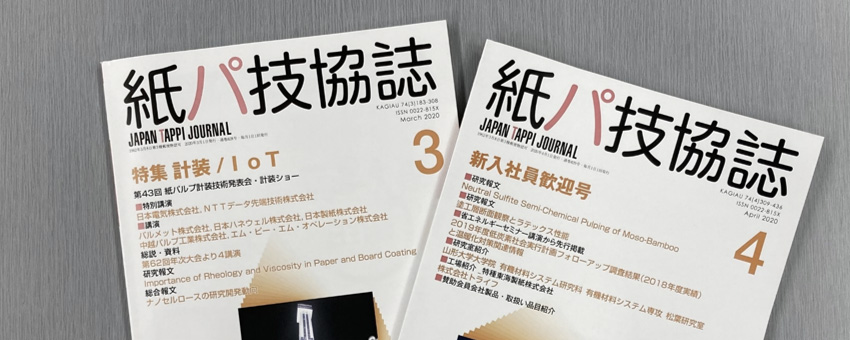
On the Occasion of the Manufacturer's
Presentation (Maker's Lecture), the 30 Years of History for Instrumentation
Process Control and Automation Committee, JAPAN TAPPI
As a memorial to the 30th anniversary of instrument show, we have
planned a manufacturer's presentation. "The History and Future" of
instrument system are presented by various manufacturers. At the
same time, we made the chronology of "The instrument technology of
pulp and paper" and insert them.
Innovation of Technology, History and Future Technology
for QCS
Satoshi Nakamura
Process Solution Pulp & Paper, Honeywell Japan Co., Ltd.
Fundamental technology of basis weight sensor was funded in ‘40s
and it was used for survey meter for radiation. Since first QCS
was introduced in '50s to the paper market, technologies for QCS
were dramatically changed. Recently, Honeywell introduced new and
unique technologies as SpectraFoil, Express Moisture sensor, GalView,
Laser caliper sensor and Multi variable controls for Supercalender.
And advanced camera technologies are used for new generation's
sensors as formation and fiber orientation. We believe those technologies
are going to contribute making better paper in terms of quality
and productivity.
Innovating Distributed Control System
- The Past and the Future -
Masatoshi Nakahara
PA Solution Dept., YOKOGAWA Electric Corporation
Distributed Control System (DCS) appears on the market as a substitution
of a panel instrument or a distributed system of Direct Digital
Controller. At the beginning stage DCS was growing based on the
severe evaluation and the feedback from the customers of all process
industries and finally DCS established the firm position as one
of the indispensable equipments in the process industry. During
this period the technical development of computers was remarkable
and our office environment changed drastically however the basic
architecture of DCS has not changed. This proves that DCS abstracted
the necessary functions highly and integrated them from the beginning.
Currently the production activity of the company regarded as one
system. All the function in the company evaluated as the contribution
of the profits of the company as a whole. Naturally, the expected
role for DCS exceeds a limit as merely a distributed control system
and it should be innovated as an important platform to operate
the plant.
The WIS of Evolution and its History and Future
Masahiro Nakata
W.I.S. Group, IT Solution Division, Omron Corporation
Now, the demand to the improvement in quality from a market increases
further, and especially the quality demand of the surface defect
of the packing material of food and medicine is remarkable. Each
packing material maker planned the performance rise of surface
defective inspection equipment more often, in order to respond
to it. On the other hand, low cost and rationalization are advanced
for company survival. OMRON had about 2500 sets of the history
of the enterprise of about 30 years. The delivery track records,
expectation and a demand to the domestic maker from a user also
had a severe thing especially. Positioning in the field of WIS
is also severe and the equipment trouble has become a situation
of carrying out a line stop and making it restore. Therefore, the
demand of reliability to 24-hour operation is high. Also in order
to answer to the expectation and the demand patronage-obtained
for years from a user, in OMRON, it supposes that a model change
is undergone as inspection equipment of the 7th generation, and
came to develop "Super NASP". "Super NASP" is used as the indicator
which respects and develops the opinion of a user, specification
is determined as the basis of cooperation of a user. The viewpoint
of its history, present, and future of WIS has described the text.
About the History and the Future of the Evolving MES
Yasuki Nagai
Industrial Systems Solutions Department
Industrial Systems Division
TOSHIBA MITSUBISHI-ELECTRIC INDUSTRIAL SYSTEMS CORPORATION
In this paper, we introduce MES (Manufacturing execution System).
We first describe the history, and, next, explain the system that
applies the Web applications as one of the latest technologies
of MES.
As a merit of the system that applies this technology, the long-term
use for the application software, and the extendibility of the
system are shown. It explains the function of the information system
in the future at the end.
Technology Innovations of Field Instruments
- Technology Innovations of Flow Measurement -
Fumitaka Nozawa
Yamatake Corporation, Advanced Automation Company
Industrial Products Marketing Department
The customers utilize the differential pressure flowmeters and
electromagnetic flowmeters on their sites to measure steams and
pulp slurries. However these flowmeters have some issues to measure
them stably. Especially the differential pressure flowmeters have
clogging problems in the lead pipe, and the electromagnetic flowmeters
have adhesive problems on the lining by pulp slurries. In this
writing , I will propose the solutions for steams applications,
and for black liquor and green liquor applications.
A Multivariable Brightness Control of Bleaching Process by Model
Predictive Control
Masahiro Kawakita
Kasugai Mill, Oji Paper Co., Ltd.
Yoshitatsu Mori
Pulp and Paper Research Laboratory, Oji Paper Co., Ltd.
Jun Nishimura
Industrial Solutions Business Headquarters, Yokogawa Electric Corporation
The needs of the optimal control for paper mills are increasing.
The optimal control can reduce the cost and increase the productivity.
MPC (Model Predictive Control) is a controller which can control
the multivariable and long delay time system optimally, so the
MPC is suitable for the optimal control of the paper plant.
We applied the MPC system to the soft wood bleaching process of
the KASUGAI Mill for the brightness control. The purpose of the
brightness control is to stabilize the discharged final pulp brightness
and to decrease the chemical cost.
The sequence flow of the target bleaching process consists of
[D1-E/O-P-D2] stages. At first, we applied this MPC system to the
D2 stage of
the bleaching process to verify the controllability of MPC to bleach
process. As the result, we could see the contribution effect of
the MPC system to stabilize the final brightness. The next target
is to expand and to improve the MPC system to cover the whole process
of the bleach plant.
Example of Waste Water pH Control by Fuzzy
Takayuki Ohkura
Saga Mill, Oji Paperboard Co., Ltd.
Seven loops of pH control for wastewater treatment plant at Oji
Paperboard Saga Mill, which used to be taken control of with conventional
PID algorithm, did not totally satisfy with its control response.
Generally, pH controls for neutralization process have non-linear
characteristics. In addition, dead time would be long at the wastewater
treatment plant because of limited installation location of pH
meter and would vary depending upon discharge volume. Accordingly,
time consuming fine tuning procedure for PID parameters just covers
some specific conditions, but never represents satisfactorily entire
status of the plant.
In this article, introduction of fuzzy control system in two out
of seven pH control loops which had worse performance and had been
strongly claimed for modification, significant improvement in control
response and reduction of neutralizing agent cost after installation
as well as principle of two loops with fuzzy system are summarized.
About the Adoption Made of the Other Companies DCS in the DCS Superannuation
Update
Hirokazu Tanaka
Soka Mill, Nippon Daisyowa Paperboard Kannto Co., Ltd.
DCS introduced first in the grass processing place has passed
20 years since it operated, and has come to interfere from the
production stoppage to the spending passing of time increase remodeling.
In addition, the problem of the part supply and the maintenance
time limit was instituted by the manufacturer, and the examination
of the system update in parallel with the life prolongment measures
started.
It was judged that it was possible to change in a short time comparatively
because the update by the migration method was proposed by another
manufacturer, and the update of the entire system became possible
without detaching external wiring and executed it though a phased
partial update by the same manufacturer was examined from the relation
between the budget and the construction period at first. It reports
on the update case by the migration this time.
Improvement of DCS (Distributed Control System) Operation Under
the Environmental Optimization of Industrial Conditions
Yasuhiro Miki
Mishima Mill, Daio Paper Corp.
For the last 4 or 5 years, incidents of DCS failure had been increasing
at our Mishima Mill. Due to the increasing downtime these events
were causing, the company undertook an in-house project to identify
the causes and develop methods of reducing such failures.
We analyzed the system's environment and the hardware's susceptibility
to a number of potential irritants such as dust, temperature, humidity
levels and corrosive gases (like hydrogen sulfide(H2S), sulfur
dioxide (SO2), etc.) to see if we could reveal an obvious culprit.
Our team also focused on improving the general conditions in control
rooms and computer areas to make them more machine-friendly.
In this report we detail the processes we followed to isolate
the control system's physical vulnerability vectors and the steps
we've
since taken which have resulted in a marked decrease in the number
of hardware failures.
Installation of Next-generation Web-inspection-system and Verification of System
Performance
Tomoyoshi Kudoh
Ishinomaki Mill, Nippon Paper Industries Co., Ltd.
The web-inspection-system is one of the indispensable systems as a tool of a
quality control and defective cause investigation for paper making.
Nowadays, reconversion of the system is achieved as full-digital system according
to digital camera adoption. Nippon Paper Industries has been developed the next-generation
web inspection system in collaboration with OMRON in earnest since March, 2005.
In this paper, conquest of the weak point of an old Analog web-inspection-system
and the circumstances of the improvement, the introduction details and quality
assessment to the present stage of the system, and the future view are described.
Current State and Development in the Future of GelView Sensor on No.5 Coater
Yutaka Maemura
Maintenance and Engineering Dept., Mitsubishi Paper Engineering Co., Ltd.
Old Honeywell QCS (MX-2002ET) on No.5 Coater in Hachinohe Mill was upgraded
to new Honeywell QCS (DaVinci) on August 2005.
DaVinci System can consolidate various Honeywell new sensors. The one of them
is GelView sensors which are installed in the dryer to measure the coating surface
quality directly after the coater head. GelView would make it possible to optimize
the evaporation rate in MD position and coating speed, which lead to the improvement
of the coating quality and the reduction of the energy of the dryer. GelView
sensors were installed in June, 2006.
In this article, the results of the introducing GelView and the future of GelView
would be reported.
Report of 2006 TAPPI Engineering, Pulping & Environmental Conference
Koki Kisara
Oji Paper Co., Ltd.
Shinichi Onogi
Nippon Paper Industries Co., Ltd.
2006 TAPPI Engineering, Pulping & Environmental Conference was held in
Atlanta, GA, USA from November 6 to 8. This conference included 110 presentations,
5 Panel sessions and 4 Workshops. In this report, the review of the conference
and some presentations are presented.
Development of Manufacturing Process for High Quality Calcium Carbonate by Causticizing
Process in a Kraft Pulp Mill
- Part2: Controlling Factors for Precipitation of Aragonite -
Haruo Konno, Yasunori Nanri and Hideyuki Goto
Pulp and Paper Research Laboratory, Nippon Paper Industries Co., Ltd.
Kazuto Takahashi
Gotsu Mill, Nippon Paper Chemicals Co., Ltd.
Mitsutaka Kitamura
University of Hyogo, Graduate School of Engineering
Precipitated calcium carbonate is produced as a by-product in the causticization
step of the kraft pulping process. There are many advantages to use this by-product,
causticizing calcium carbonate (CCC), as filler and coating pigment in paper.
By using this CCC for paper materials, lime-kiln operation can be shortened or
stopped, resulting in the reduction of fuel oil for calcination of calcium carbonate.
Furthermore, accumulated impurities in the lime cycle can be removed constantly.
In our previous reports, we showed that aragonite crystal with high quality performance
was obtained in the causticizing reaction. However, it is not clear the reason
why high quality aragonite crystal could be obtained by the causticizing reaction.
In this paper, the effect of reaction conditions on the precipitation of aragonite
was precisely investigated. The results showed that aragonite crystal could be
obtained under the conditions at optimum temperatures with low CO
concentration. In addition, the presence of NaOH in the mother liquor accelerated
the precipitation
of aragonite crystal. These favorable conditions to precipitate aragonite crystal
can be easily formed in the causticizing reaction; therefore, causticizing reaction
is suitable to produce aragonite crystal.
Keywords: Causticizing reaction, calcium carbonate, aragonite, crystallization |
|